Amostra · Pre-A1, Sample · Pre-A1
Olá! Como estás?, Lesson one, as it is
Um excerto da primeira lição, tal como aparece no curso: o primeiro ecrã e dois exercícios. Aqui é só para ler; nada é corrigido. An excerpt of the first lesson as it appears in the course: the first screen and two exercises. Read-only here; nothing is marked.
Ecrã 1 · Screen 1
Start with a greeting
In this lesson you will learn five expressions: olá, bom dia, boa tarde, boa noite and até logo.
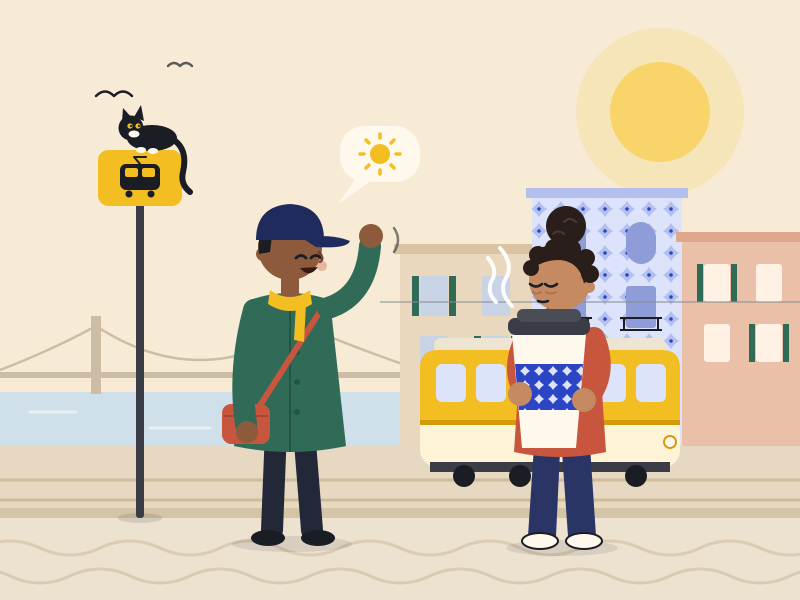
In Portugal, people greet each other when they meet: in shops, cafés, lifts and on the tram. A greeting is polite and expected.
Temos de tomar um café qualquer dia destes.
“We have to have a coffee one of these days.” A friendly way of saying goodbye. It is not a plan.
Affectionate stereotype: this sentence can be repeated for years without a single coffee happening. A real invitation comes with a day and a time.
Exercício 1 · Exercise 1
Which expression means “good morning”?
- Boa tarde
- Bom dia
- Boa noite
- Até logo
Resposta · Answer: Bom dia
Bom dia is a common morning greeting in Portugal.
Pick a wrong one and you get this instead: Boa tarde means “good afternoon”. Bom dia is the one for the morning.
Exercício 2 · Exercise 2
Type the Portuguese for “good morning”.
Hint: Two words. It starts with “bom”.
Resposta · Answer: Bom dia
Bom dia. Capital letters and a final exclamation mark do not matter here.
A lição completa continua com mais frases, um diálogo e mais exercícios. The full lesson goes on with more phrases, a dialogue and more exercises. Ver os níveis · Como funciona
Fase piloto.Early version. Listen buttons use your phone's Portuguese voice where it has one; recordings are coming.